









5/1
時点_ポイント最大12倍
Death
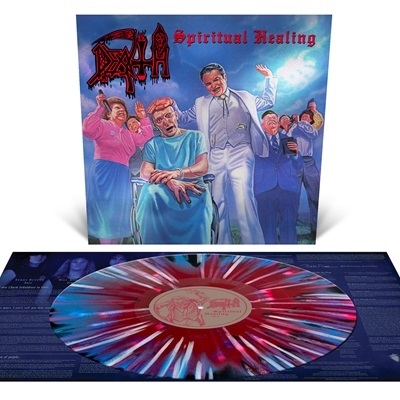
Death 「Spiritual Healing<Red, Cyan and Black Merge with Splatter Vinyl>」 LP
販売価格
4,090
円 (税込)
- 出荷目安:
- 当日-翌日出荷
たまるdポイント(通常) 37
+キャンペーンポイント(期間・用途限定) 最大11倍
※たまるdポイントはポイント支払を除く商品代金(税抜)の1%です。
※表示倍率は各キャンペーンの適用条件を全て満たした場合の最大倍率です。
各キャンペーンの適用状況によっては、ポイントの進呈数・付与倍率が最大倍率より少なくなる場合がございます。
dカードでお支払ならポイント3倍
各キャンペーンの適用状況によっては、ポイントの進呈数・付与倍率が最大倍率より少なくなる場合がございます。
 マークは試聴できる楽曲です。


- 商品情報
- レビュー
【販売店・発送】 タワーレコード株式会社
商品の情報
| 発売日:2024年04月12日 / ジャンル:ROCK/POP / フォーマット:LP / 構成数:1 / 製造国:輸入 / レーベル:Relapse Records / SKU:781676520114 / 規格品番:RR52011 |
商品の紹介
| 1990's Spiritual Healing wrapped up a trilogy of Death LPs delineating the birth of a genre and featuring the childishly provocative splatter-gore cover art of the ever-popular Ed Repka; artwork that, as the years wear on, has increasingly undermined the revolutionary musical accomplishments contained within all three of the legendary Floridian death metal band's first studio efforts. But, more importantly and accurately, Spiritual Healing closed the second chapter of Death's career (the first having consisted of an unusually protracted self-discovery demo period), thus setting the stage for leader Chuck Schuldiner's imminent creative peak. From a personnel perspective (always an intriguing subplot of any Death album), Schuldiner had only recently parted ways with longtime accomplice Rick Rozz and replaced him with a far more refined and versatile shredder in Atlanta-based guitar prodigy James Murphy. After initially turning down the position, Murphy quickly realized his error and relocated to Orlando, where he joined Schuldiner and the returning Terry Butler/Bill Andrews rhythm section in time to begin composing, rehearsing, and recording Spiritual Healing at old, reliable Morrisound Studios with producer Scott Burns in the fall of 1989. Released in February of 1990 through Combat Records, the album was met with surprisingly mixed reviews. On the one hand stood the more conservative, extreme metal contingent that resented the album's sacrifice of sheer musical savagery in the name of cleaner production, improved musicianship, and evident songwriting refinements; and, on the other, the more forward-thinking listeners who embraced it for all of the very same reasons. Love them or loathe them, though, brand new Death standards like "Altering the Future", "Low Life," and the masterful title track (which even contained a brief keyboard part performed by the band's manager) showcased consistently intriguing riff sequences and time changes to go with much more abundant melodic parts and solos traded between Schuldiner and Murphy. Much of remaining material was also rife with individual highlights, but, admittedly, some songs did suffer from lingering bouts of sophomoric lyrics and gratuitously violent concepts (see "Living Monstrosity," "Killing Spree"). It's also important to point out that there was still a thrash-derived tone to Death's guitars -- not to mention thrash-based songwriting elements -- that would finally vanish when the group adopted the thicker sound and lower tunings now seen as the prototypical American death metal sound for their "great leap forward": 1991's seminal Human album. It's really only in comparison to this history-making achievement and Schuldiner's subsequent masterpieces that Spiritual Healing is justifiably diminished, because in every other sense, it's a hell of an album that reflects what was probably Death's most crucial transition phase, to boot. ~ Eduardo Rivadavia |
| --- |
収録内容
・構成数 | 11.LP
|