












10/2
時点_ポイント最大11倍
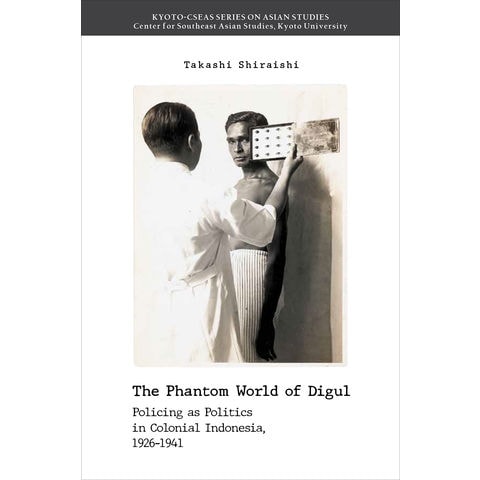
The Phantom World of Digul Policing as politics in Colonial Indonesia /白石隆
販売価格
3,300
円 (税込)
- 出荷目安:
- 1~2営業日で出荷
たまるdポイント(通常) 30
+キャンペーンポイント(期間・用途限定) 最大10倍
※たまるdポイントはポイント支払を除く商品代金(税抜)の1%です。
※表示倍率は各キャンペーンの適用条件を全て満たした場合の最大倍率です。
各キャンペーンの適用状況によっては、ポイントの進呈数・付与倍率が最大倍率より少なくなる場合がございます。
dカードでお支払ならポイント3倍
各キャンペーンの適用状況によっては、ポイントの進呈数・付与倍率が最大倍率より少なくなる場合がございます。


- 商品情報
- レビュー
≪商品情報≫
著者名:白石隆
出版社名:京都大学学術出版会
発行年月:2021年11月
判型:A5変
ISBN:9784814003624
≪内容情報≫
Digul was an internment colony for political prisoners established in 1926, upriver in West Papua. It is the key to understanding Indonesia’s colonial rule between the failed communist rebellion of late 1926 and the fall of the Indies to the Japanese in 1942, a time when the Dutch regime attempted to impose “rust en orde”, peace and order, on the Indonesian people via the suppression of politics by the police. The political policing regime the Dutch Indies state created was both a success and a failure. The native terrain was never completely pacified. Activists linked up with each other in fluid networks that cut across spatial and ideational boundaries.
How did the government deploy political policing to achieve its policy objectives? What were the consequences and challenges for Indonesian activists? How was the government able to fashion its policing apparatus as the most potent instrument to achieve peace and order when the Great Depression hit the Indies, nationalist and communist forces were gaining strength in other places of the world and war was coming both in Europe and Asia? This long-awaited sequel to the author’s acclaimed An Age in Motion: Popular Radicalism in Java, 1912〓1926, attempts to answer these questions.
著者名:白石隆
出版社名:京都大学学術出版会
発行年月:2021年11月
判型:A5変
ISBN:9784814003624
≪内容情報≫
Digul was an internment colony for political prisoners established in 1926, upriver in West Papua. It is the key to understanding Indonesia’s colonial rule between the failed communist rebellion of late 1926 and the fall of the Indies to the Japanese in 1942, a time when the Dutch regime attempted to impose “rust en orde”, peace and order, on the Indonesian people via the suppression of politics by the police. The political policing regime the Dutch Indies state created was both a success and a failure. The native terrain was never completely pacified. Activists linked up with each other in fluid networks that cut across spatial and ideational boundaries.
How did the government deploy political policing to achieve its policy objectives? What were the consequences and challenges for Indonesian activists? How was the government able to fashion its policing apparatus as the most potent instrument to achieve peace and order when the Great Depression hit the Indies, nationalist and communist forces were gaining strength in other places of the world and war was coming both in Europe and Asia? This long-awaited sequel to the author’s acclaimed An Age in Motion: Popular Radicalism in Java, 1912〓1926, attempts to answer these questions.