







10/18
時点_ポイント最大2倍
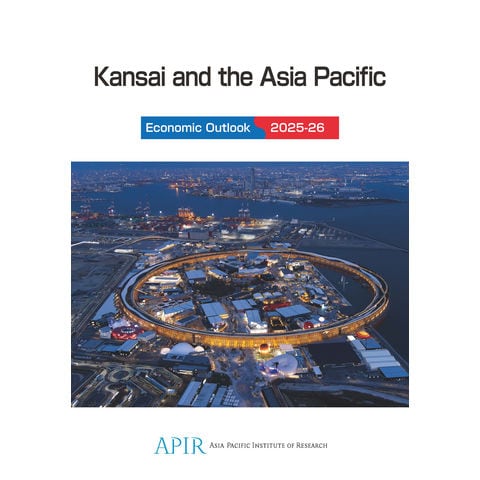
Kansai and the Asia Pacific Economic Outlook 関西経済白書 英語版 2025ー26 /ASIA PACIF
販売価格
2,750
円 (税込)
- 出荷目安:
- 1~2営業日で出荷
たまるdポイント(通常) 25
+キャンペーンポイント(期間・用途限定) 最大1倍
※たまるdポイントはポイント支払を除く商品代金(税抜)の1%です。
※表示倍率は各キャンペーンの適用条件を全て満たした場合の最大倍率です。
各キャンペーンの適用状況によっては、ポイントの進呈数・付与倍率が最大倍率より少なくなる場合がございます。
dカードでお支払ならポイント3倍
各キャンペーンの適用状況によっては、ポイントの進呈数・付与倍率が最大倍率より少なくなる場合がございます。
※クーポン適用後の費用は決済画面で確認できます


- 商品情報
- レビュー
≪商品情報≫
著者名:ASIA PACIFIC INSTITUTE OF RESEARCH(一般財団法人アジア太平洋研究所
出版社名:日経印刷
発行年月:2026年04月
判型:A5
ISBN:9784865795097
≪内容情報≫
"APIR’s “Kansai and the Asia Pacific Economic Outlook” is an annual white paper featuring analyses and forecasts of key issues affecting the economies of the Asia-Pacific region, Japan, and Kansai.
This year’s Economic Outlook consists of four parts. Part I examines developments in the U.S. economy and global economic trends under the second Trump administration, focusing on trade and economic policies, energy security, U.S.?China competition, and changes in the Asia-Pacific trade structure, particularly in ASEAN economies. Part II reviews recent developments and short-term prospects for the Japanese and Kansai economies, analyzing labor supply constraints, inbound tourism, the economic impacts of the Osaka?Kansai Expo, industrial structure, and post-pandemic consumption behavior. Part III presents a chronology centered on EXPO 2025, outlining major developments and initiatives in the periods before and after the Expo. Part IV contains a statistical annex.
We hope this publication will serve as a useful reference for those interested in the economic development of the Asia-Pacific region and Kansai."
著者名:ASIA PACIFIC INSTITUTE OF RESEARCH(一般財団法人アジア太平洋研究所
出版社名:日経印刷
発行年月:2026年04月
判型:A5
ISBN:9784865795097
≪内容情報≫
"APIR’s “Kansai and the Asia Pacific Economic Outlook” is an annual white paper featuring analyses and forecasts of key issues affecting the economies of the Asia-Pacific region, Japan, and Kansai.
This year’s Economic Outlook consists of four parts. Part I examines developments in the U.S. economy and global economic trends under the second Trump administration, focusing on trade and economic policies, energy security, U.S.?China competition, and changes in the Asia-Pacific trade structure, particularly in ASEAN economies. Part II reviews recent developments and short-term prospects for the Japanese and Kansai economies, analyzing labor supply constraints, inbound tourism, the economic impacts of the Osaka?Kansai Expo, industrial structure, and post-pandemic consumption behavior. Part III presents a chronology centered on EXPO 2025, outlining major developments and initiatives in the periods before and after the Expo. Part IV contains a statistical annex.
We hope this publication will serve as a useful reference for those interested in the economic development of the Asia-Pacific region and Kansai."